(816) 789-9401


Paver patios can look solid on the first day, but what happens under the surface decides how they hold up. In Lee's Summit, MO, July can bring hot afternoons, clay that gets hard one week, and rain that tests every low spot the next. For Blue Springs, MO, homeowners, that mix can turn a small base problem into a crooked patio faster than they may expect. This blog will help explain why patios shift when the base and drainage are not built right, and what homeowners should understand before planning their next outdoor project.
Patios Need A Strong Base Before The Surface Looks Finished
Pavers Settle When The Soil Moves
Pavers do not usually shift because one stone suddenly decides to move on its own. They move because the layers beneath them were not sufficiently prepared to support weight, water, and changing soil conditions. A patio may look finished once the top layer is swept in and compacted, but the real support comes from the soil, gravel, and bedding layer below it. If those layers are too thin, too loose, or uneven, patios will slowly start showing dips and raised edges. This can happen around seating areas, grill spots, steps, and walkway connections where people naturally use the space more often.
Clay-heavy soil makes this problem more noticeable because it can swell when wet and shrink when dry. On many Lee's Summit, MO, properties, the top layer can feel packed tight during summer heat, then become soft after a hard rain. That movement puts pressure under pavers in different ways, especially if the patio base was not dug deep enough. Some sections may settle while others remain higher, creating a wavy surface that is hard to ignore. Once that starts, adding sand on top is usually not enough because the real issue is deeper than the surface.
Hardscaping Starts Below The Surface
Good hardscaping begins before the first paver is placed. The area has to be excavated to the proper depth, the soil has to be compacted, and the gravel base has to be installed in layers rather than dumped all at once. Each layer should be packed down so it can carry weight evenly across the whole patio. When this step is rushed, patios can look beautiful at first but begin to shift after normal use. A strong surface needs a strong base, or the finished project is only hiding a future repair.
The depth of the base also depends on the patio’s purpose and the site conditions. A small sitting area may not need the same base as a larger entertainment space that holds furniture, foot traffic, and a heavy grill. The soil, slope, and drainage pattern all matter too. Hardscaping is not only about making the top look neat; it is about building something that can handle real outdoor use. This is why a dependable crew should assess the yard before presenting homeowners with a plan that seems too simple.
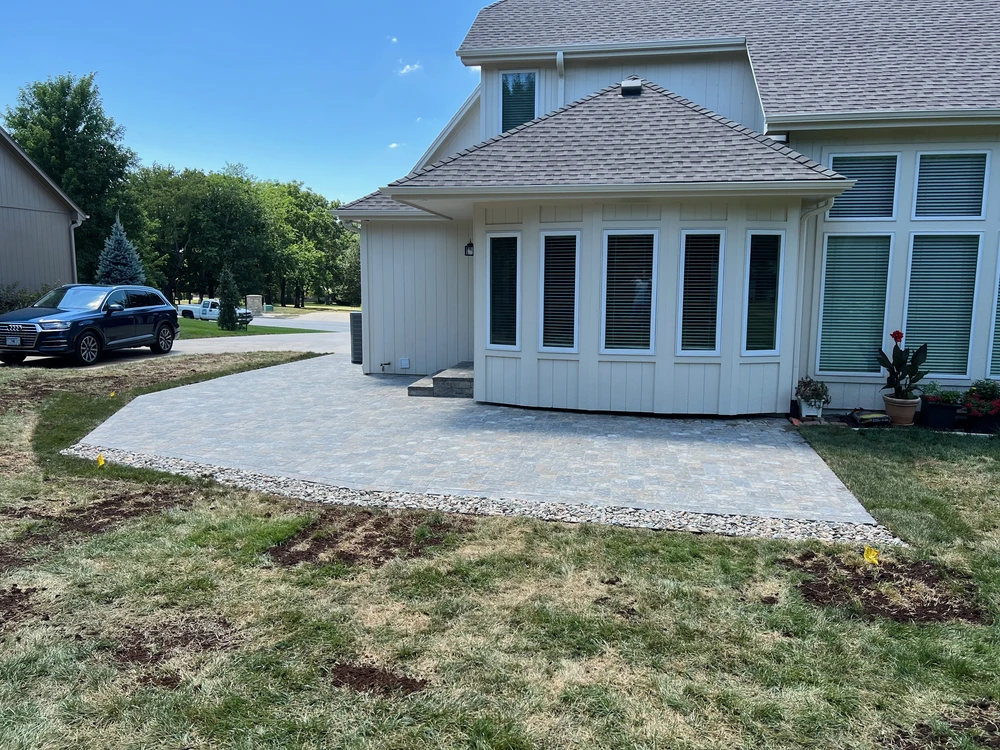
Patios Shift Fast When Water Has Nowhere Safe To Move
Pavers Need More Than Sand
Sand is used in many paver systems, but it should not be treated as the main support layer. If too much sand is used, pavers can rock, settle, or wash out around the edges. If water gets into that loose layer and has nowhere to go, the surface can become unstable after repeated storms. Homeowners may first notice a low corner, a spreading joint, or a section that feels uneven underfoot. Those small signs usually mean the patio is reacting to water movement below the surface.
This is especially important in July, when a yard can go from dry to soaked in one afternoon storm. A Blue Springs, MO, yard with poor grading may send roof runoff, downspout water, or slope runoff straight toward the patio. Once water starts collecting under pavers, it can carry away fines, soften soil, and create hollow spots. Over time, the pavers above those areas lose support. That is why patios should be planned with drainage in mind before any surface pattern or border choice is chosen.
Hardscaping Fails Near Poor Slopes
A patio should never be built like a flat tray that holds water. It needs a slight slope so water moves away from the house and away from the paver base. If the slope is missing or aimed the wrong way, water can sit under the patio, along the edge, or against nearby structures. That can lead to settling, joint loss, and messy edges that keep needing attention. In some yards with drop-offs, retaining walls may also help manage grade before patio work begins.
Poorly sloped areas can also create problems around beds, lawn edges, and walkways that connect to the patio. If water rushes across one corner every time it rains, that corner will usually be the first area to shift. Hardscaping should be tied into the whole yard, not treated as a separate square dropped into place. Downspouts, soil grade, nearby planting beds, and traffic patterns all affect how patios perform. When water is controlled from the start, the patio has a much better chance of staying even through summer storms and winter freeze cycles.
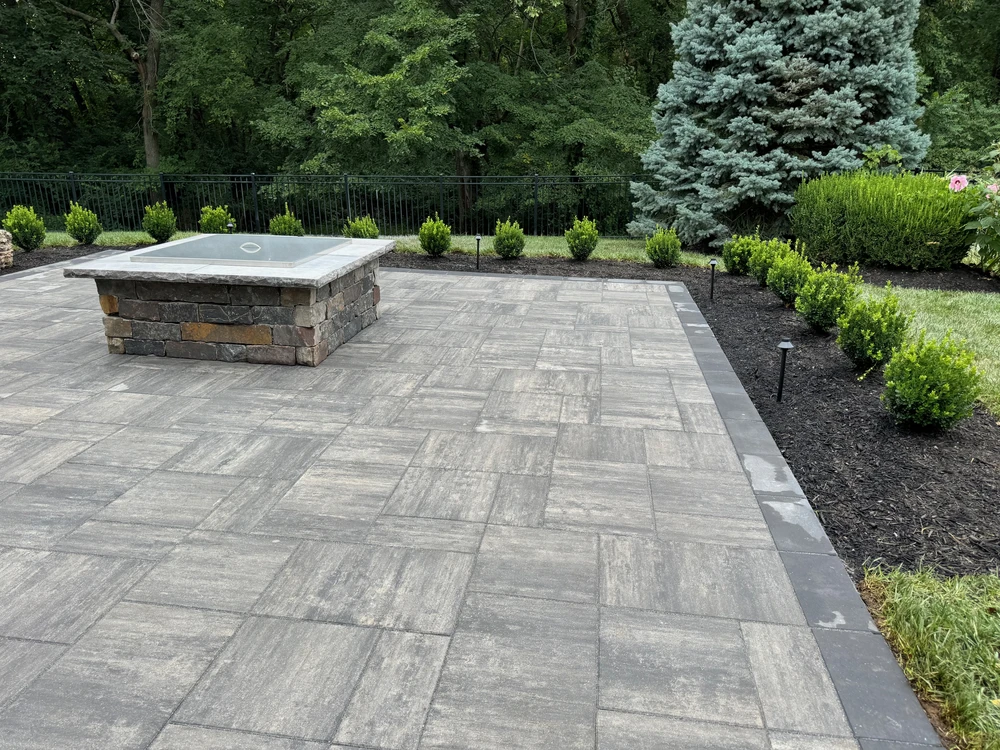
Patios Last Longer With Careful Prep And Clear Planning
Pavers Should Fit The Yard
The best pavers for a project are not only the ones that look good in a catalog. They should fit the yard, the soil, the way the patio will be used, and the kind of maintenance the homeowner wants to handle. A shaded backyard may dry out slower after rain, while a full-sun area may bake during July afternoons. A patio near a pool, outdoor kitchen, or fire feature may need different planning than a small seating area off a back door. These details matter because patios are not just decorative; they become part of daily life.
The pattern and border also affect performance. Borders help lock pavers in place, while the main field handles foot traffic and furniture. If the edge restraint is weak or missing, the outer pavers can start spreading away from the center. Once that happens, joints open up, and the surface loses its tight fit. A good plan also considers nearby mulch beds, lawn transitions, and how maintenance equipment will move around the area without damaging edges.
Hardscaping Choices Need Care
Even well-built hardscaping needs care, but the goal is to avoid constant repairs caused by poor installation. Joint material may need refreshing, weeds may need attention, and the surface may need cleaning over time. That is normal for outdoor surfaces exposed to sun, rain, snow, and daily use. What is not normal is a patio that starts to dip, lift, or hold water soon after installation. When that happens, the base and drainage are usually the first things to question.
Homeowners should also be careful with bids that skip the boring details. If a contractor talks only about color, pattern, and how fast the job can be done, important steps may be missing. A clear patio plan should explain excavation, base depth, compaction, slope, edge restraints, and drainage. It should also make room for honest site concerns, even if those concerns change the budget. That kind of planning helps prevent unwanted surprises, which matters when homeowners are trusting someone with a major outdoor upgrade.
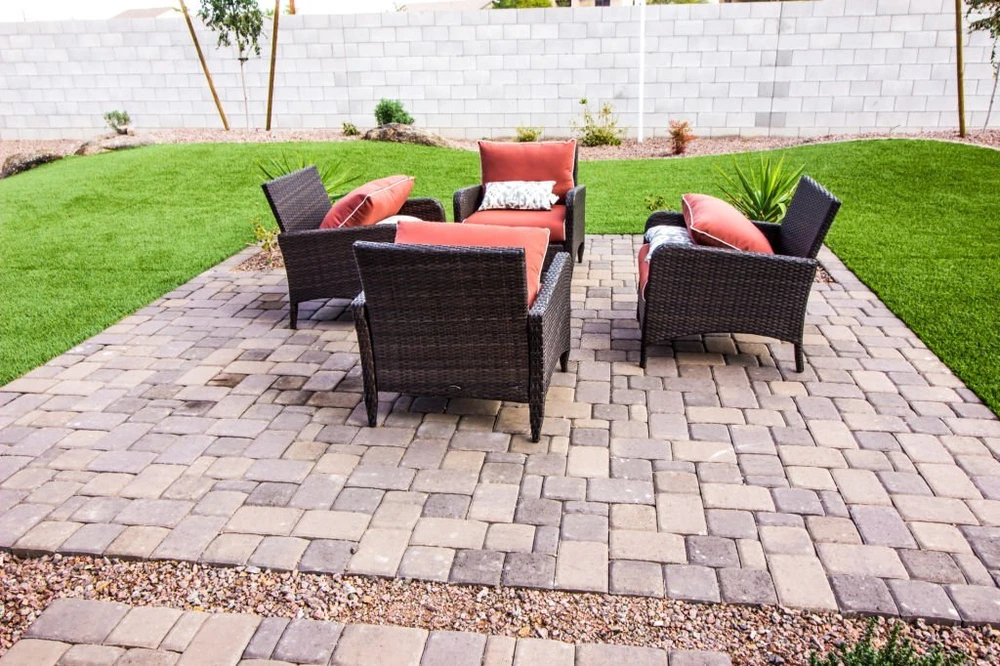
Conclusion
Patios shift when the base is weak, the soil is not prepared, or water is allowed to sit where it should not. A beautiful paver surface needs good preparation underneath it, especially in areas where summer rain, clay soil, and seasonal changes all affect the ground. At LMD Solutions, we show up on time and explain the work clearly so there are no unwanted surprises. We are your local go-to for services when you want patios and outdoor projects handled with care from the first conversation to the finished result. Contact us today to discuss your yard and how we can help build a patio that is built to last.