(816) 789-9401


Are you noticing muddy spots around your outdoor sitting area right as summer plans start to fill the calendar? It can be frustrating when one good rain turns the edge of the patio into a mess, especially before cookouts, graduation parties, and family evenings outside. A good landscaping plan can help homeowners figure out why the ground is staying wet and what needs to be fixed before the yard gets busier. This blog will walk through the common causes of patio mud, the repairs that actually help, and how to make the area more usable before the middle of summer arrives.
Landscaping Signs That Explain Muddy Ground
Patio Soil That Stays Wet After Rain
Muddy soil near a patio usually means water is being trapped rather than moving away. Sometimes it is a low spot where rain naturally collects. Other times, the soil has become compacted by foot traffic, mower wheels, pets, or years of water sitting in the same place. In June, warmer weather can make the top layer look dry for a moment, but the ground underneath may still feel soft. Homeowners in Lee’s Summit, MO, may notice this more after heavy spring rain rolls into early summer.
A landscaping team will usually look at how the yard slopes before anything else. If the ground slopes toward the hard surface, water can sit against the edge and soften the soil each time it rains. That can make the patio feel messy even when the rest of the yard looks fine. This is also why adding more soil on top does not always solve the problem. If the water still moves to the same place, the mud will come right back.
Drainage Signs Near The Edges
Drainage problems are not always obvious at first. A homeowner may see dark soil, thinning grass, puddles along the border, or mulch washing into the seating area. The edge may also sink a little over time, leaving a gap where water and dirt collect. In Blue Springs, MO, some neighborhoods have compacted clay soil, which can mean water may sit longer after a storm. That kind of soil needs more than a fast surface cover.
Good landscaping work looks at where the water starts, where it travels, and where it ends up. If roof runoff, downspouts, or a nearby slope keep sending water to the same corner, that corner will keep failing. A small muddy patch can also be a sign that the surrounding grade is not doing its job. The best fix depends on whether the water is coming from rain, runoff, poor grading, or soil that cannot drain fast enough. Once that is clear, the repair becomes much easier to plan.
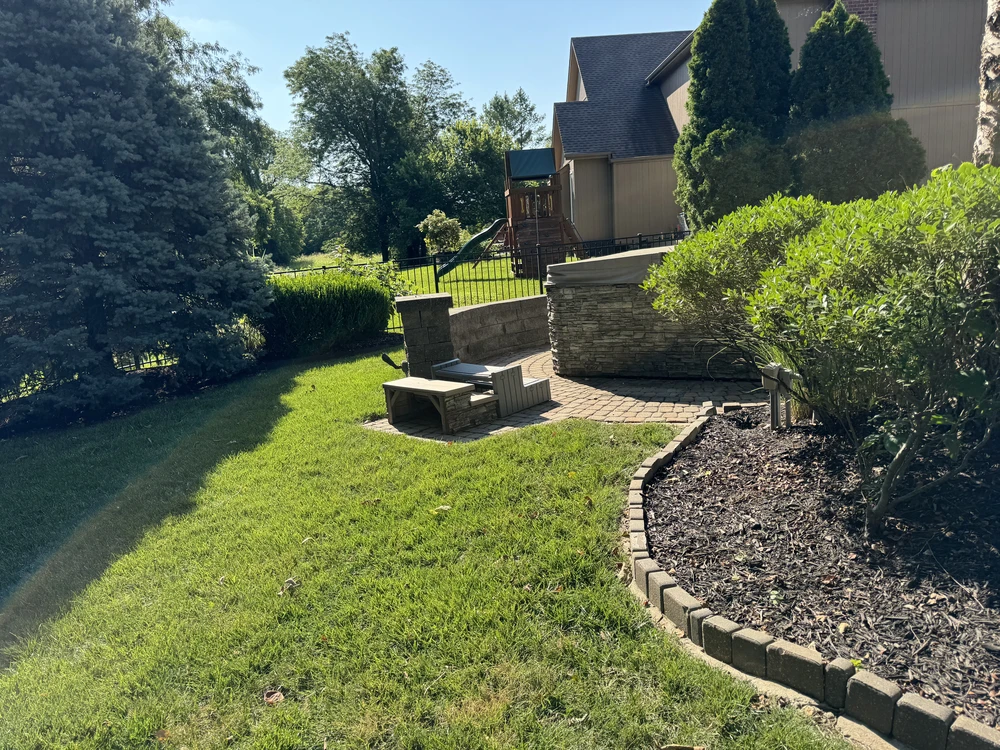
Landscaping Repairs That Redirect Water
Proper Drainage and Grading for Wet Ground
Grading is one of the most important parts of fixing muddy spots, but it is also one of the easiest to overlook. Grading means shaping the soil, so water moves away from the hard surface instead of sitting beside it. This does not always mean a big project. Sometimes the area only needs careful soil work, a better slope, and proper compaction to prevent the ground from sinking again after the next rain.
A smart landscaping repair should also protect the hard surface. If soil is built too high against the edge, water can sit where it should not. If the soil is too low, the edge can become a small channel for runoff. Around Lee’s Summit, MO, summer storms can bring enough rain in a short time to show every weak spot in the yard. That is why grading should be done with the next storm in mind, not just how the area looks the day it is finished.
Drainage Paths That Need Room
Drainage needs a clear place to go. If water is blocked by thick soil, packed mulch, edging, or poorly placed stone, it can sit and make the ground soggy. Some yards need a simple swale, which is a shallow, shaped area that guides water away. Other yards may need r when water needs help moving through gravel and a buried pipe. The right option depends on how much water is showing up and how often it happens.
A landscaping choice should also fit the homeowner's use of the space. A family that walks from the house to the grill every evening will need stronger ground support than an area used only on weekends. Blue Springs, MO homes with side yards or fenced backyards may also need a plan to move water without directing it toward a neighbor’s property. That is where careful planning matters. Water should be managed to protect the yard, the hard surface, and the areas people actually walk on.
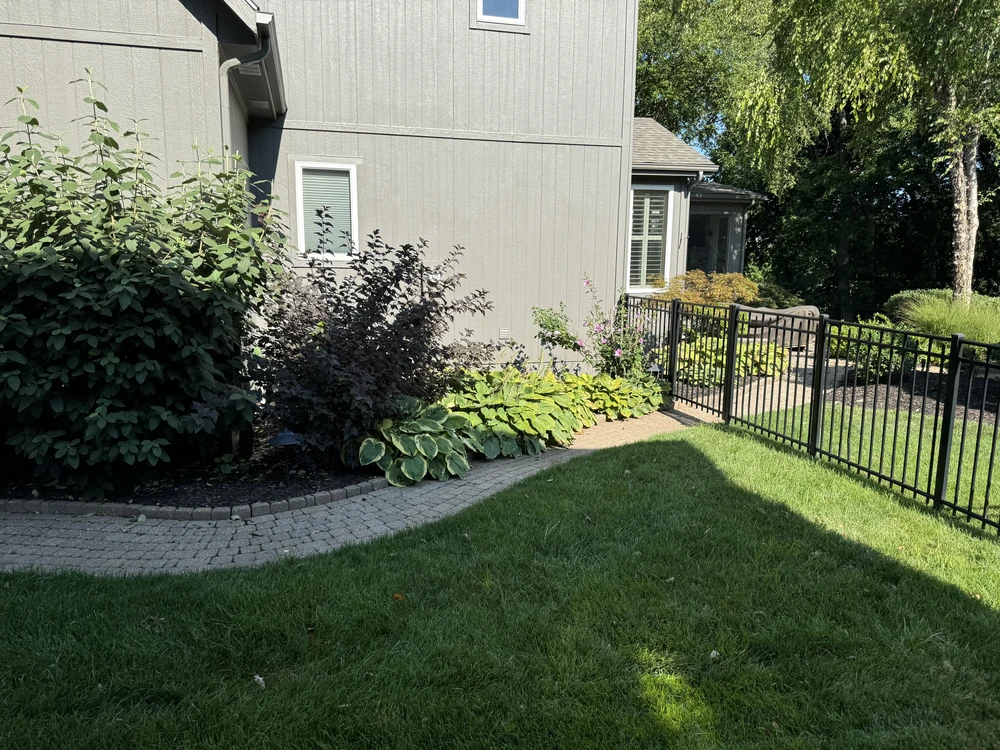
Landscaping Choices That Help The Patio Stay Usable
Patio Edges That Can Handle Foot Traffic
Once water is moving the right way, the edge still needs to hold up to summer use. A muddy strip beside a patio often gets worse because people step in the same spot over and over. Shoes push soil down, chairs scrape the ground, and kids or pets can quickly wear away grass. If the area is already soft, all that movement makes it worse. This is why a repair should consider daily use, not just wet soil.
Landscaping details such as stone borders, properly placed river rock, turf repair, or stronger planting beds can help the edge remain more usable. The goal is not to cover up the mud and hope for the best. The goal is to build an edge that can handle rain and foot traffic simultaneously. For some homeowners, that may mean replacing worn grass with a more durable surface near the sitting area. For others, it may mean adjusting the soil and adding plants that can handle moisture without becoming messy.
Retaining Walls That Support the Patio
Retaining walls can help when a muddy area is connected to a slope or raised bed near the patio. They are not needed for every wet spot, but they can be useful when soil keeps sliding, washing out, or pressing into the outdoor living area. A small wall can hold back soil and create a cleaner border when it is built on a proper base and with water control behind it. Without drainage behind the wall, though, water pressure can create new problems later.
A landscaping solution should match the size of the issue. If the problem is only a small, low area, it may not need a wall. If the yard has a slope that keeps sending soil and water downhill, retaining walls may be part of a better long-term plan. The important thing is to avoid guessing. A local landscaping company can assess the slope, soil, runoff, and patio edge together so the repair fits the yard rather than creating another soft spot nearby.
Conclusion
Muddy areas around a patio can feel small at first, but they can quickly get annoying once summer guests, cookouts, and everyday outdoor time begin. The best fix usually starts with understanding how water moves through the yard, then pairing better drainage with soil support and usable edges. At LMD Solutions, we know homeowners want landscaping help that shows up on time, avoids unwanted surprises, and comes from a local go-to team that understands the area. If your outdoor space is already getting soft before summer gets busy, contact us today, and we can help you find the right next step.