(816) 789-9401


After a big spring storm, some patios look fine the next morning, and others look like they went through a small disaster. Homeowners in Lee's Summit, MO often notice it first when puddles form in the same spots or the surface looks uneven near the edges. It can feel confusing because the patio might not be very old, and nothing “big” has happened. Keep reading, because this blog breaks down what is really going on with patios after spring storms, and what helps them hold up better.
Patios Need Better Drainage During Spring Storms
Drainage Clues Homeowners Notice After Storms
When patios struggle after storms, the first signs are usually small. Water stays in one corner longer than it should, and the surface can feel grimy even after it dries. Homeowners may see a thin line of washed soil along the patio edge, as the yard leaked onto the slab overnight. Sometimes there is a musty smell near the house, especially when water sits close to the foundation. These clues do not always mean the patio was built “wrong,” but they do suggest water is moving where it should not.
Another common clue is movement in the joints and seams, especially on patios built with pavers. If water runs across the surface with force, it can pull sand out of joints and leave tiny gaps that grow over time. In Blue Springs, MO, that can happen after one of those fast downpours that hit before the soil can soak anything in. People also notice mulch floating out of beds and collecting against the patio edge, a sign that runoff is taking the easiest route. Real drainage starts with noticing these patterns, because the water is basically showing the path it takes every time.
Hardscaping Choices That Help Water Move Away
The way the patio connects to the yard matters just as much as the surface itself. If the surrounding grade is higher than the patio, stormwater will continue to drain onto it, even if the patio is perfectly level. The best layouts guide water away using gentle slopes that feel natural when someone walks across the space. A border detail can also help, as it creates a cleaner transition between the lawn and patio, making it less likely for soil to wash over. When hardscaping is planned for an entire area rather than a single slab, patios usually stay cleaner after storms.
Downspouts are another big piece of the puzzle, and they are constantly overlooked. If a gutter empties too close to the patio, that water will carve channels in the yard and dump mud right where people want to sit. Over time, the soil around patios can settle, which changes where water collects. Homeowners sometimes think they need a full replacement when the real fix is to direct roof runoff to a better spot. In some yards, French drains are a smart option because they provide an underground path for water rather than letting it spread across the surface.
Patios Fail When the Base Shifts After Rain
Drainage Trouble That Washes Sand From Patios
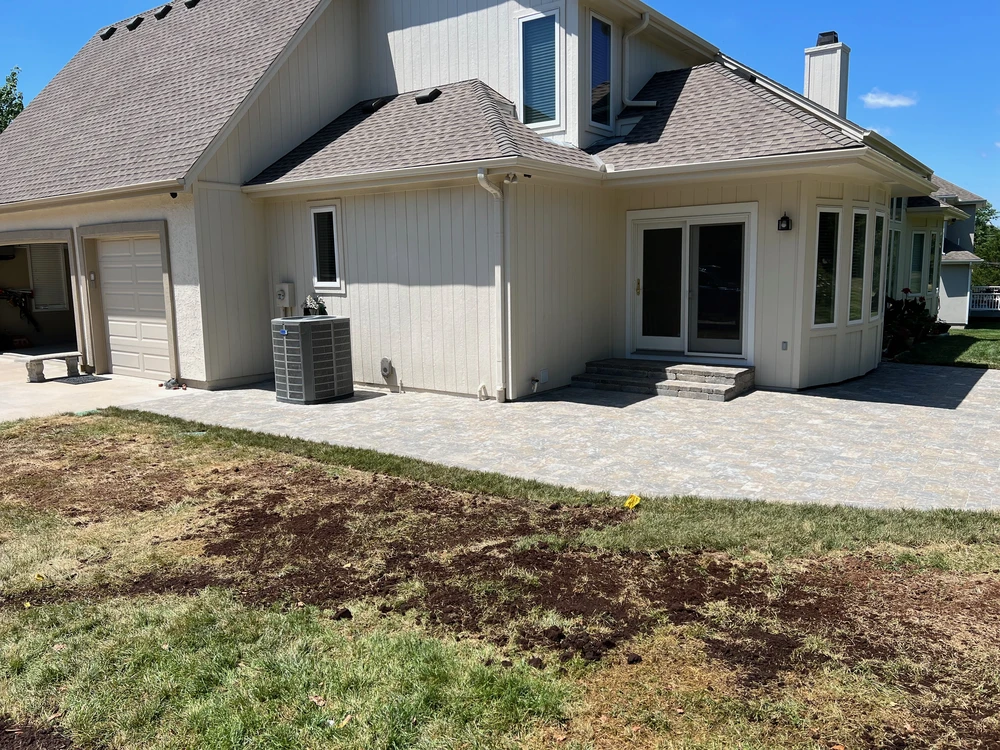
Many patios that struggle after spring storms are fighting a base problem, not just a surface problem. In May, the ground can go from saturated to dry quickly, and that back-and-forth puts stress on what lies beneath. If the base was not compacted well, water can soften it, and then drying can leave small voids where material shrinks away. That is how patios start to dip at corners, or feel slightly wavy when someone walks across them. Once the base shifts, surface water problems usually become more frequent.
This is also where joint material starts disappearing, especially if the patio has a lot of water rushing over it. When the soil around patios stays wet, it can push fine sediment up and out, making the surface look dirty even after it has been freshly rinsed. Homeowners may think it is just a “spring mess,” but it keeps returning because the patio is losing support in small ways. The fix is not always dramatic, but it needs to address what is happening under the surface. When the base stays firm, patios withstand storms with much less visible damage.
Hardscaping Steps That Keep Patios Level
Strong patios usually have layers that work together, and that starts with the right depth and compaction. A proper base is built to handle water moving through the soil, not just water on top of the patio. That means the material underneath needs to drain and stay tight, even after heavy rain. Edges matter too, because weak edges are where patios first spread, shift, or settle. Once an edge breaks down, the rest of the surface follows.
This is where hardscaping craftsmanship shows up, even if homeowners never see the hidden layers. A well-built patio is not only about making it look straight on day one, but also about keeping it straight after storms, heat, and daily use. When patios are repaired correctly, the goal is to stabilize the base, reset the surface, and improve how water moves around it. In Lee's Summit, MO, many yards have soils that hold moisture, so base prep becomes even more important. A patio that looks “fine” in a dry week can struggle fast once May rain hits again.
Patios Suffer When Roof Runoff Flows Downhill
Drainage Fixes That Redirect Patio Rain Away
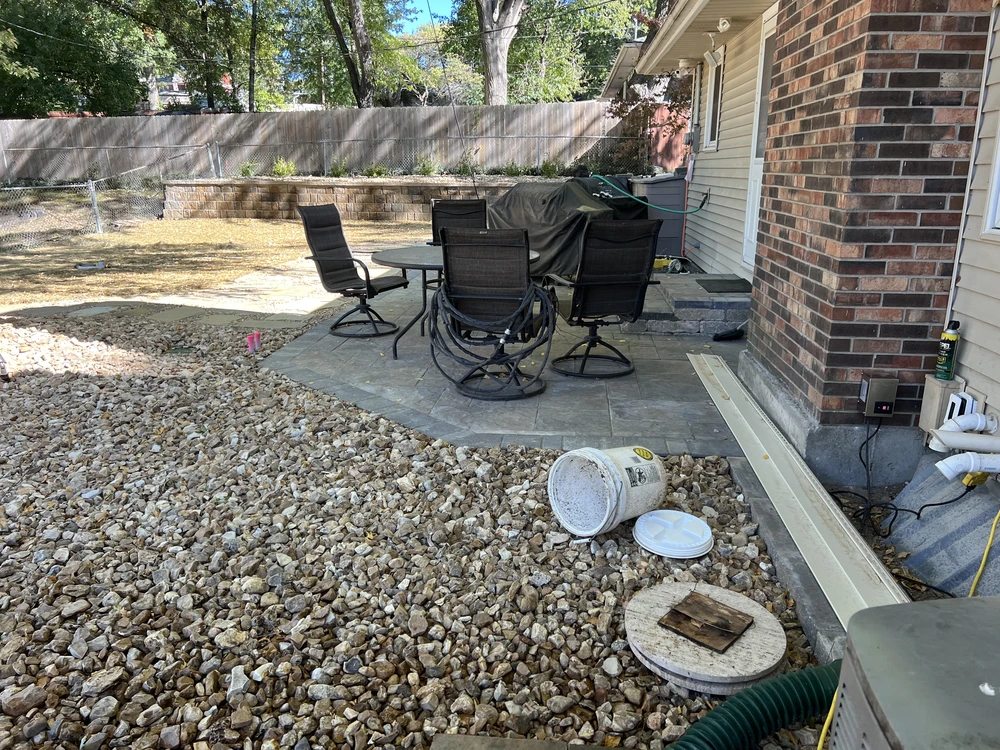
A patio can be built well and still struggle if it is placed in the wrong water path. When a yard slopes toward the house, stormwater naturally heads for the lowest point, and patios often sit right in that zone. Homeowners may notice water cutting a line through the lawn, then fanning out across the patio once it hits the hard surface. The frustrating part is that it feels like the patio is “causing” the problem, when the yard’s shape is really the issue. Redirecting that flow is often the turning point for patios that keep getting hit after storms.
Sometimes the solution is as simple as moving water away from the patio with better grading around the edges. In other cases, the water needs a clear exit route so it does not continue to pool near the home. That might mean extending downspouts, adding a channel, or installing French drains where water collects most. The best fix depends on what the yard is doing during real storms, not what it looks like on a sunny day. Once water has a direction, patios usually dry faster and stay cleaner.
Hardscaping Upgrades For Stronger Patio Edges
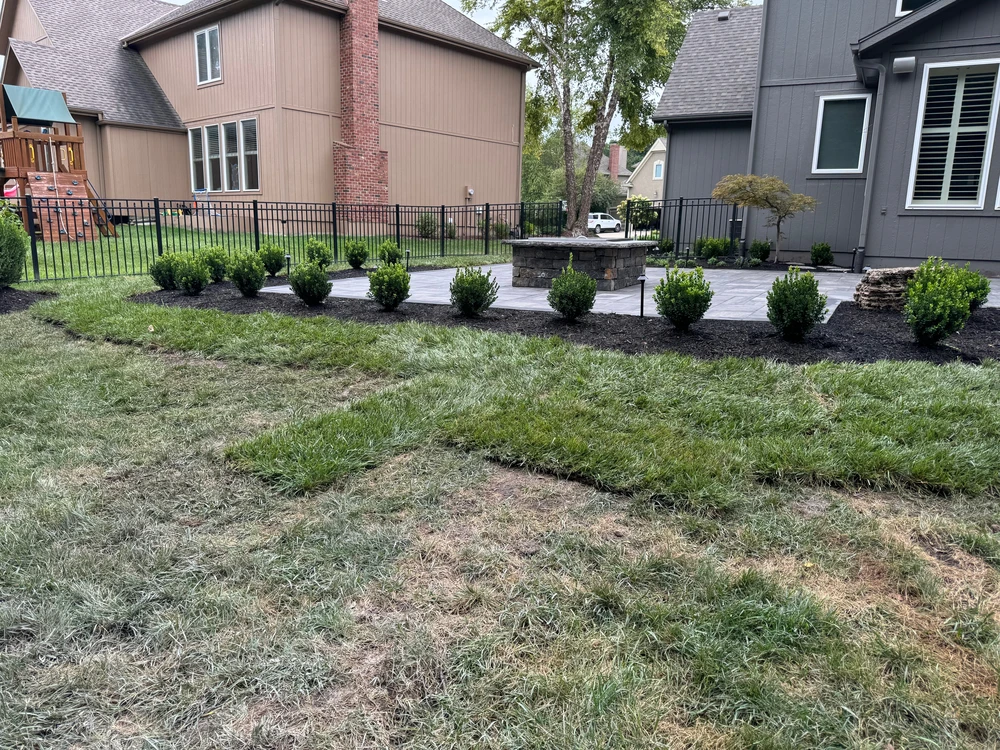
Patio edges are where storm damage shows up first, and they are also where upgrades can make the biggest difference. If the border is weak, water can slip beneath it and begin washing away support, little by little. A stronger edge detail helps lock everything in, especially on patios made with pavers where joint stability matters. It also helps when the patio sits near beds, because it gives runoff fewer chances to drag soil onto the surface. The goal is to keep patios stable while still making them look natural in the yard.
In Blue Springs, MO, homeowners often see this when a patio sits near a slope or a side yard that funnels water during storms. If the edge is not reinforced, the surface can settle near the water-entry point, and the whole patio can begin to feel uneven. A smart upgrade might include better border support, base correction, and a cleaner transition into surrounding beds. This is where hardscaping planning helps avoid headaches, because it addresses both the patio and the water that keeps attacking it. When patios are built and supported the right way, spring storms become less of a threat and more of a normal part of May.
Conclusion
Now that spring storms are rolling through, it makes sense that patios show wear when water keeps pushing into the same weak spots. The good news is that most patio problems have a clear cause, and once that cause is addressed, the space usually becomes easier to enjoy. Homeowners do not need guesswork or surprise add-ons halfway through the job; they need a clear plan and solid work. That is why we at LMD Solutions always show up on time, keep the process straightforward with no unwanted surprises, and stay the local go-to for services when patios need real repairs. If your patio is struggling after storms, contact us, and we will help you figure out what is happening and what to do next.