(816) 789-9401


March is when a yard in Lee’s Summit, MO, can look fine one day, then a heavy rain comes through, and the slope starts sliding again. That muddy trail down the hill is not just messy; it can slowly pull plants out, expose roots, and make the whole space harder to use. A retaining wall is one of the cleanest ways to control erosion, but many homeowners worry it will make the yard feel like a blocky wall of stone. This blog will break down how to keep the soil in place while still keeping the yard looking soft and welcoming, so keep reading.
Why a Retaining Wall is Vital for Sloped Landscapes
Patios Near The Wall That Drain Right In Rain
When a yard slopes toward the back door, patios cannot take the brunt of the slope. Water rushes down, carrying soil with it, and the edge of the patio starts to look stained and uneven. A retaining wall can make that problem manageable by creating a level spot where the grade stops trying to move. Instead of one long slide of dirt, the yard gets a clear break, and that is where erosion usually slows down. In Blue Springs, MO, it is common to see runoff cut a line right beside a patio edge after winter, especially if the soil is clay-heavy.
A softer look comes from the shape of the space, not just from what it is built from. If the wall is stepped down in height rather than remaining tall across its entire length, the eye reads it as part of the landscape rather than a barrier. Curves help too, because a straight line can feel sharp when the yard is small. Some homeowners also like to pair the patio surface with pavers. Hence, the materials feel warmer and more lived-in, especially in early spring when everything else is still waking up.
Hardscaping That Stops Washouts On Hills Fast
A slope does not need a giant structure to be controlled; it often needs smarter hardscaping that works with the grade. A retaining wall gives the soil a firm place to stay, but it only performs well when the base and backfill are built right. In March, the ground is still coming out of freeze-thaw, so shortcuts can appear quickly, such as leaning blocks and sinking corners. A properly built wall is set on compacted base material, and the soil behind it is supported with gravel and fabric to allow drainage. That drainage piece is the difference between a wall that stays true and one that starts shifting after the first storm.
To keep the yard from feeling too “stone heavy,” the wall can be treated like a garden feature, not just erosion control. A retaining wall with short terraces gives room for plant pockets, small shrubs, and groundcovers that spill slightly over the edge. That green layer softens the look right away, even before the yard fills in for summer. Natural-looking block faces, weathered stone, or a mixed texture can also help, because shiny new blocks can feel harsh against a traditional home.
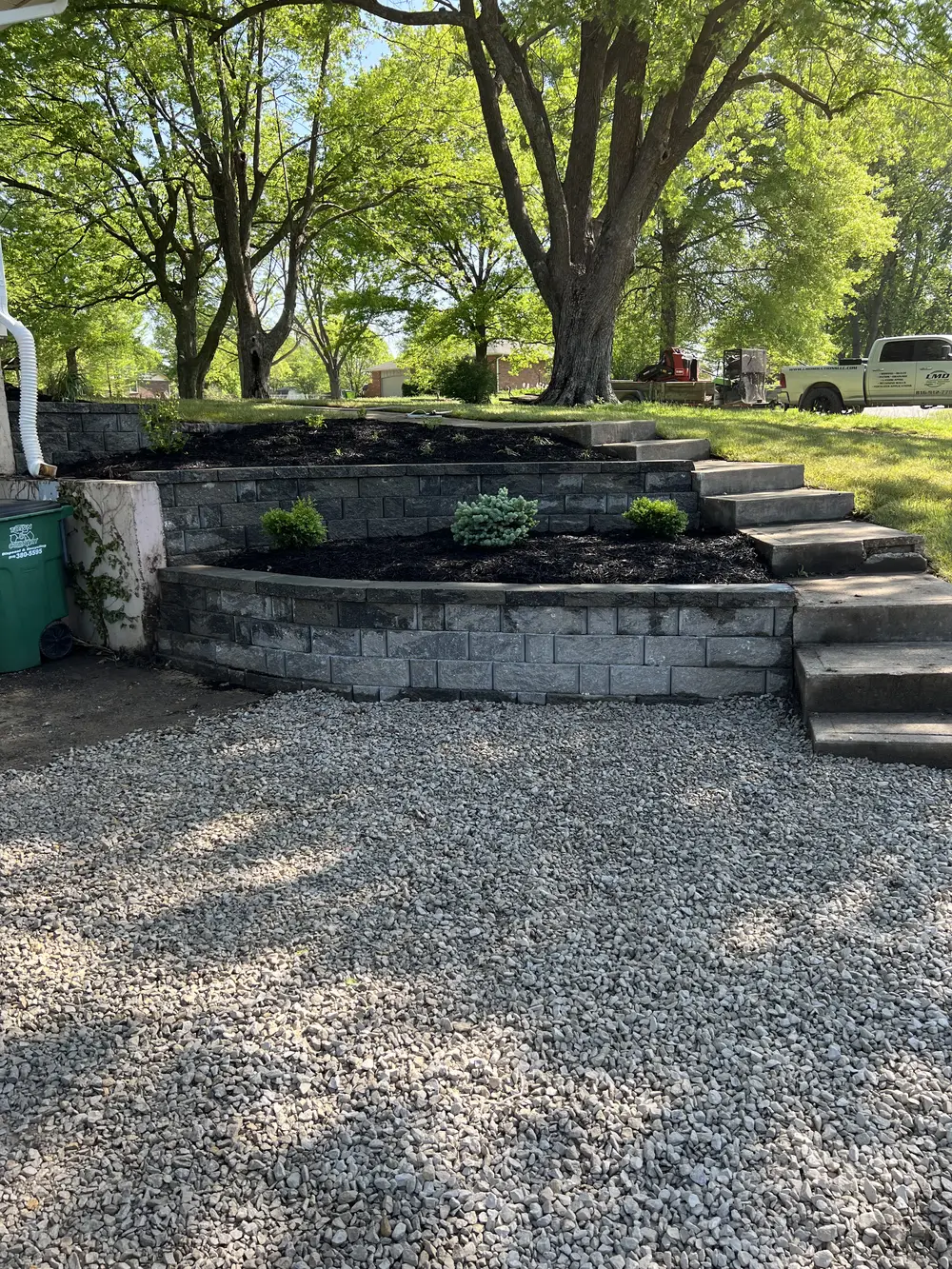
Retaining Wall For When Spring Storms Hit Your Yard
Hardscaping That Handles Runoff Without Mess
Erosion is really a water problem, and March weather in Missouri loves to remind people of that. When rain hits cold soil, water tends to run across the surface rather than soak in, and that is when the slope starts to move. A retaining wall helps by breaking the hill into smaller grades, which slows water down and gives it more time to soak where it should. Still, the wall cannot do that alone if water is being dumped behind it from a downspout or a low gutter corner. Sometimes the best fix is redirecting runoff before it ever reaches the slope.
Drainage behind the wall also helps keep it from becoming a pressure point. When water builds up behind blocks, it pushes outward, and that pressure is what causes bowing or cracking over time. The fix is not complicated, but it has to be done deliberately: clean the gravel, drain the pipe, and ensure a clear outlet so water can drain away. In a heavy-soil yard, that outlet matters even more because the ground holds moisture longer. This is also where proper reinforcement comes in, because taller walls often need geogrid to tie the structure back into the slope. A retaining wall built this way is doing real erosion control, not just sitting there looking pretty.
Patios That Stay Dry When Stormwater Hits
If the yard has a patio at the bottom of a slope, it can feel like the patio is always dirty, even after it is swept. Stormwater carries fine silt, which settles along the edge, then gets tracked inside. A retaining wall can protect patios by keeping the grade from washing straight onto the surface, but the details at the base still matter. The wall should be placed so the patio has a gentle pitch away from the home, and the soil line beside it stays lower than the patio edge. That way, mulch, soil, and gravel are less likely to drift where they do not belong.
A softer yard is still possible even with a patio and a wall sitting close together. Using planting beds beside patios helps because plants catch splashes and keep the eye from locking onto the stone line. A low seat-style wall can also double as extra seating, which makes it feel more like an outdoor room than an erosion fix. When the grade, water flow, and planting layout work together, the patio stays cleaner, and the yard still feels like a yard.
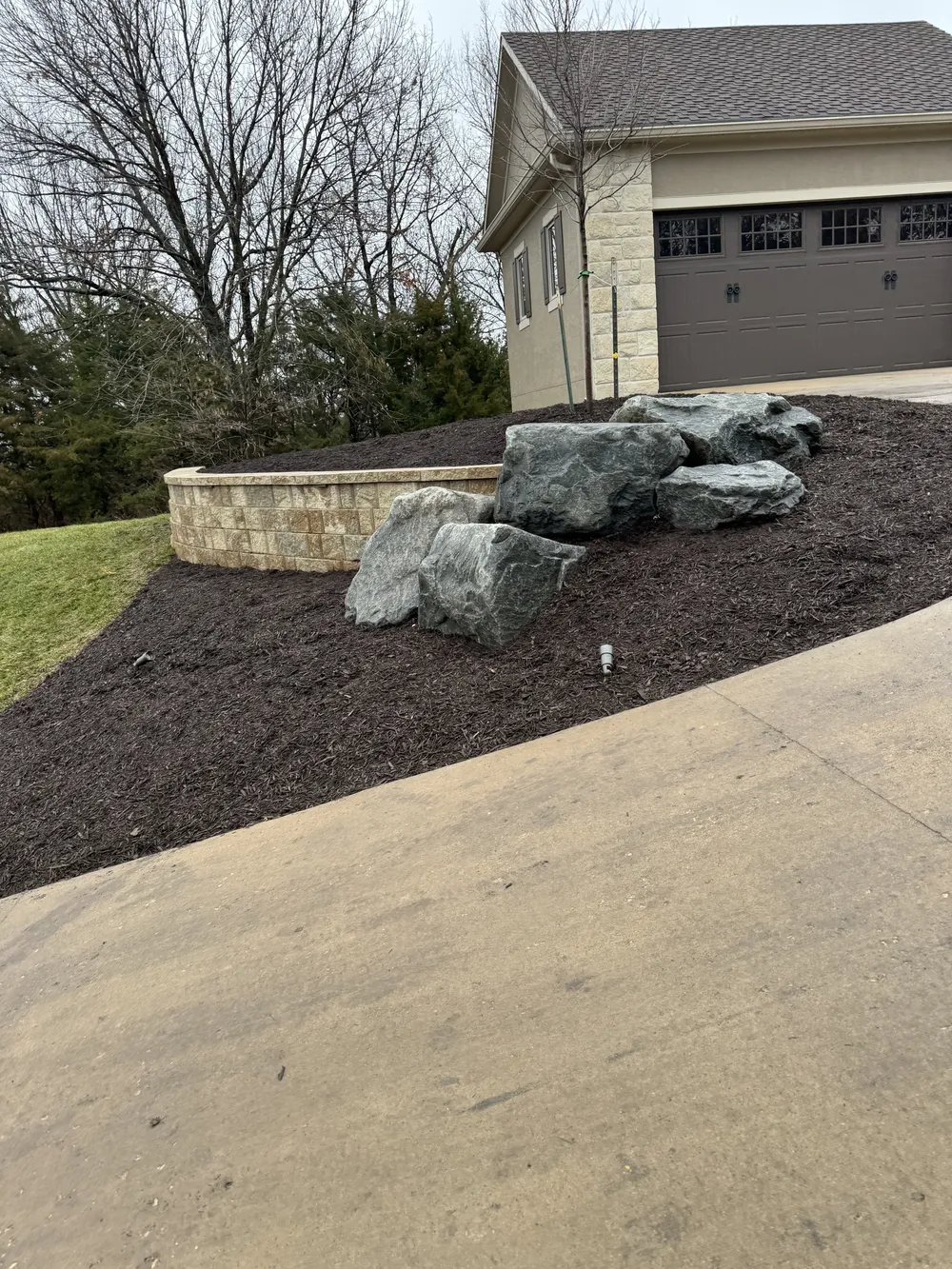
Strategic Retaining Wall Materials for a Soft Look
Patios That Pair With Walls And Plantings
A lot of the “hard” feeling comes from seeing too much stone in one place, with nothing to soften it. A retaining wall does not have to be tall, and it does not have to be the main feature of the yard. One of the easiest ways to keep it friendly is to terrace the slope with shorter walls and wider planting spaces. That creates depth and lets the landscaping do more of the talking in the warmer months. It also gives homeowners spots for color, evergreens, and texture that look good even when the lawn is still thin in March. When the wall is treated like a frame for the plantings, it feels less like a barrier.
Patios can also be designed so the wall supports the space without crowding it. Instead of putting a wall right at the edge of the patio, a small planting strip can sit between them, giving both materials some breathing room. The planting strip can also hide the base of the wall, so the stone does not feel like it is rising straight out of the patio surface. If the patio is used for a grill or a seating set, the wall can curve around the space like a backdrop, which reads more naturally than a straight line. In Blue Springs, MO, this approach works well in tighter backyards where slopes and patios are close together.
Hardscaping That Blends With Plant Beds Well
Material choice is a big deal when the goal is erosion control without a harsh look. A retaining wall built with textured block or natural stone tends to blend better with lawns and beds than a smooth, bright surface. Color matters too, because matching the wall tone to the home or the surrounding stone helps it feel like it belongs there. This is where real craftsmanship shows, because tight joints, straight lines, and clean cuts make the wall look finished.
Another way to soften the look is to plant along the top and bottom edges with plants that perform well on a slope. Groundcovers, ornamental grasses, and low shrubs can break up the stone and help hold soil, which supports erosion control beyond the wall itself. If the yard needs steps, using the same block style or matching stone keeps everything tied together. Hardscaping is at its best when it feels like one plan, not a collection of pieces. That is how a wall can do heavy-duty work while the yard still feels soft and lived-in.
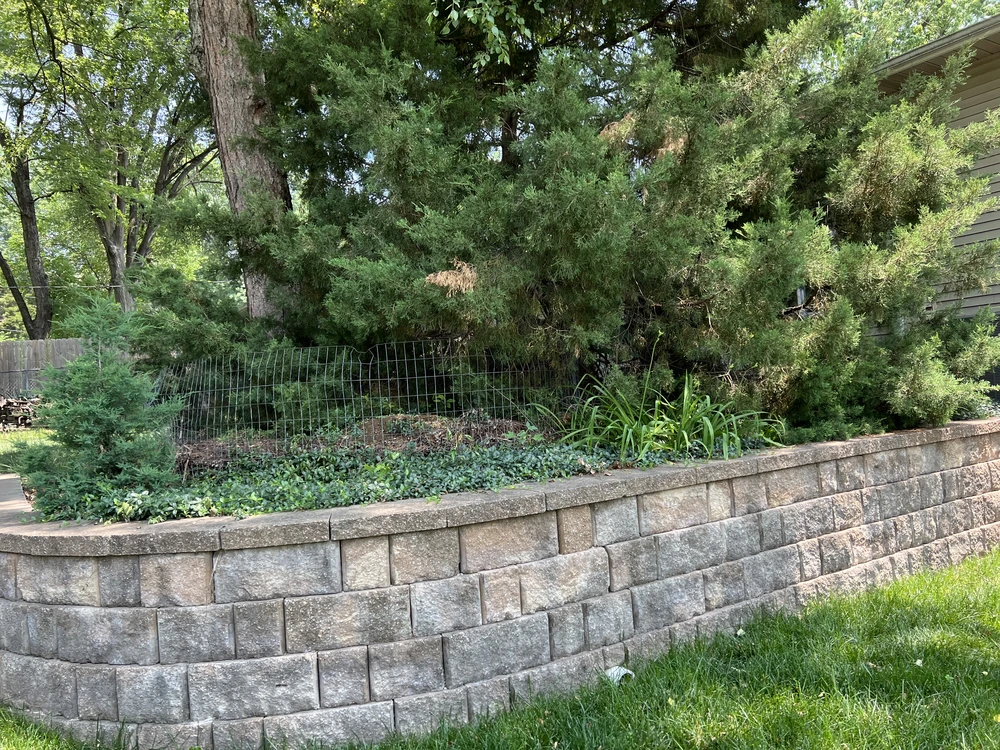
Conclusion
Now that spring rain is picking up, it helps to remember that erosion rarely fixes itself; it usually gets worse one storm at a time. A retaining wall can control that soil movement, protect patios, and create usable levels in a sloped yard without turning the space into a stone-heavy look. We at LMD Solutions believe in landscaping done right, because homeowners deserve results they can feel good about for years. If you are tired of watching your slope wash out every March, contact us, and we will help plan a solution that fits your yard and your home.